North Texas Homeowners Insurance: Rates, Roofs, and Real Coverage
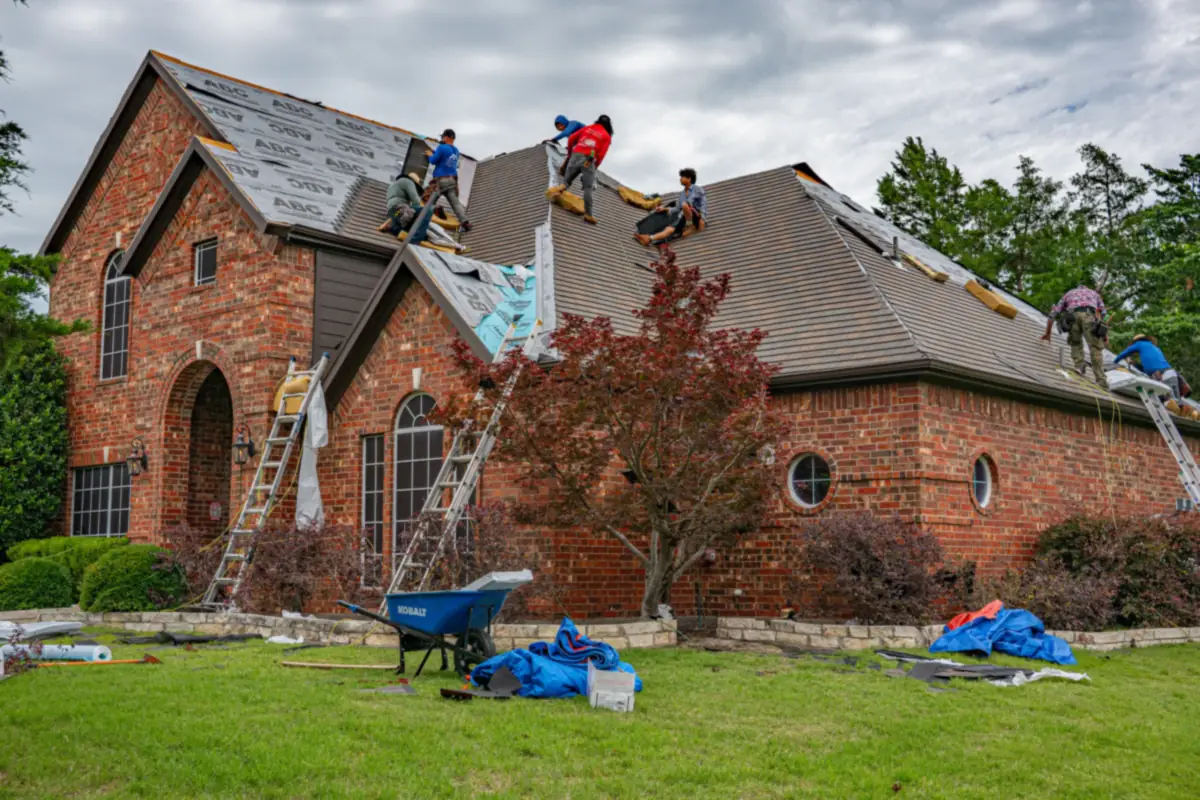
If your homeowners premium has gone up two or three renewals in a row, you are not being singled out. Rates across North Texas have climbed hard over the past several years, and most of the increase has very little to do with you or your claims history.
Here is what is actually driving it, where the real coverage traps are, and what is worth checking on your policy before your next renewal.
Why North Texas Rates Keep Climbing
Three forces are stacked on top of each other, and all three hit this region harder than most.
Hail. The Dallas–Fort Worth metroplex sits in one of the most hail-prone corridors in the country. A single storm can put a claim on every roof in a subdivision at once. That is not a normal insurance risk spread across thousands of unrelated policyholders — it is one weather event generating hundreds of simultaneous claims, and carriers price for it.
Rebuild costs. Insurance does not track your home’s market value. It tracks what it costs to rebuild it — materials, labor, permits, debris removal. Construction costs in Collin County have risen sharply, and labor has been tight since the pandemic. Even with no change to your home and no claims, the number required to rebuild it went up, so your dwelling limit went up, so your premium went up.
Reinsurance. Your carrier buys its own insurance to cover catastrophic years. Those costs have risen globally, and carriers pass them through. This is invisible on your declarations page but it is a real part of your bill.
The practical takeaway: a rate increase does not necessarily mean your carrier is treating you badly, and switching carriers does not automatically fix it. What matters is whether you are buying the right structure of coverage.
Your Wind and Hail Deductible Is Not What You Think
This is the single most misunderstood line on a Texas homeowners policy.
Most North Texas policies carry a separate percentage deductible for wind and hail — typically 1% to 2% of your dwelling coverage, not a flat dollar amount. That is very different from the $1,000 or $2,500 deductible that applies to a kitchen fire or a burglary.
Run the math on your own policy. If your home is insured for $450,000 with a 2% wind/hail deductible, you pay the first $9,000 of any hail claim. On a $12,000 roof, the carrier’s share is $3,000 — and you may reasonably decide not to file at all.
Two things to check on your declarations page right now:
- Is your wind/hail deductible a percentage or a flat amount?
- If it is a percentage, what dollar figure does it actually work out to?
Some carriers will let you buy that percentage down. Whether that trade is worth it depends on your roof’s age and your cash position, but you cannot make the decision if you do not know the number.
Roof Coverage: Replacement Cost vs. Actual Cash Value
If you read only one section of this post, make it this one. It is where North Texas homeowners get hurt worst.
Replacement cost value (RCV) pays what it costs to put a new roof on today.
Actual cash value (ACV) pays that amount minus depreciation for the age of your roof.
On a 15-year-old composition shingle roof, ACV settlement can be a fraction of the replacement cost. A $20,000 roof might settle for $7,000, leaving you to fund the rest. Carriers have moved a lot of Texas business toward ACV roof settlement — sometimes automatically at renewal, sometimes through a roof schedule endorsement that steps coverage down as the roof ages.
You may have been switched to ACV roof coverage without registering it. Look for wording like “roof surfaces — actual cash value,” “roof payment schedule,” or a windstorm endorsement referencing depreciation.
RCV roof coverage costs more. After one hail season it usually pays for itself.
Insure to Rebuild Cost, Not Market Value
A common and expensive mistake: setting your dwelling limit to what you paid for the house, or to what Zillow says it is worth.
Market value includes your land. Rebuild cost does not — and rebuilding a home in Collin County can run $250 to $350 per square foot. For many homes in Frisco, Prosper, Celina, and Allen, full rebuild cost is higher than the purchase price.
If you are underinsured, most policies apply a coinsurance penalty that reduces every claim payment, not just total losses. Ask for a current replacement cost estimate at renewal. It takes your agent a few minutes and it is the difference between a covered loss and a partly covered one.
What Homeowners Insurance Will Not Cover
Even a well-built policy has hard edges:
- Flood is never covered. Rising water needs a separate policy, and there is typically a 30-day waiting period. Collin County has real flash-flood exposure despite being nowhere near the coast — see our flood insurance guide for North Texas homeowners and our flood insurance page.
- Sewer and drain backup is excluded on standard policies. It is inexpensive to add and worth it on any older home.
- Wear, maintenance, and neglect. Insurance pays for sudden accidental damage, not for a roof that simply reached the end of its life.
- High-value items above sub-limits. Jewelry is commonly capped around $1,500 to $2,500 total for theft. An engagement ring usually needs to be scheduled separately.
Endorsements Worth Asking About
- Extended or guaranteed replacement cost — pays above your dwelling limit when rebuild costs spike after a widespread event, which is exactly when limits fall short.
- Water backup coverage — for sewer and sump discharge.
- Scheduled personal property — for rings, watches, firearms, and collectibles.
- Ordinance or law coverage — pays to rebuild to current building code, which matters on any home more than about twenty years old.
What To Do Before Your Next Renewal
- Pull your declarations page and find your wind/hail deductible. Convert the percentage to a dollar amount.
- Confirm whether your roof is covered at replacement cost or actual cash value.
- Ask for a current rebuild cost estimate and compare it to your dwelling limit.
- Review your sub-limits for jewelry and other valuables.
- Do not shop on premium alone. A cheaper policy with ACV roof coverage and a 2% deductible is not cheaper — it is smaller.
As an independent agent I place homeowners coverage across a range of carriers, and I have recently added Homeowners of America and Foremost to the lineup. Foremost in particular opens up the properties that standard carriers tend to decline — rental and landlord homes, vacant properties, seasonal and secondary residences, and short-term rentals.
If your renewal just landed and the number surprised you, send it over. I will read the policy you actually have, tell you where it is thin, and quote it against the market.
Ready to review your coverage? Contact Collin County Insurance Group for a free homeowners insurance quote.